


© 2025 Copyright – 琂樂堂藝文空間
– made by bouncin

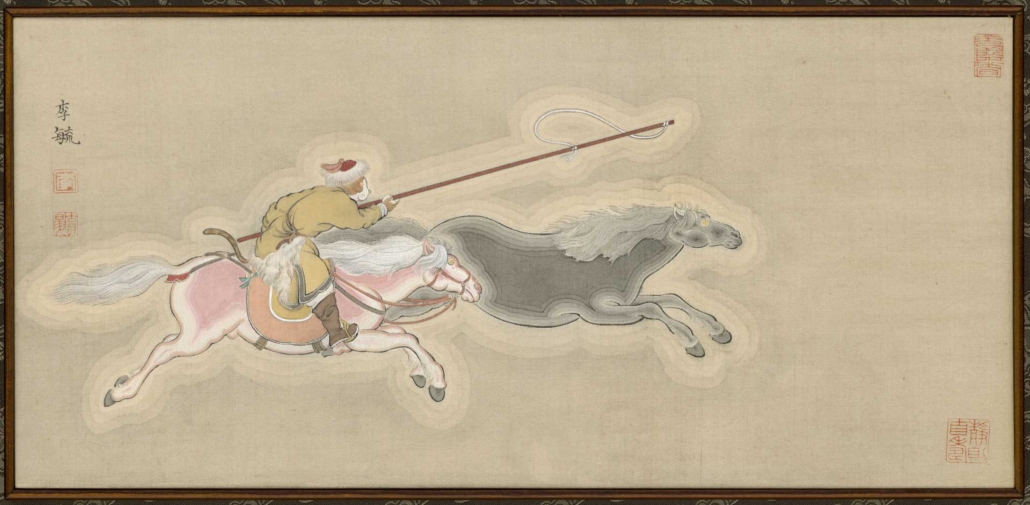
《眾相|李育昇創作首展》 展現藝術家將古典工筆語彙重新詮釋於當代視角的創作脈絡。李育昇以宋人之工的嚴謹與元人之逸的神韻為基礎,運用細密線條與礦植物顏料層層渲染,使傳統筆墨在新時代語境中獲得再生。他從古意中提煉出屬於此刻的審美與思想,使工筆重彩成為連接歷史與現實的媒介。
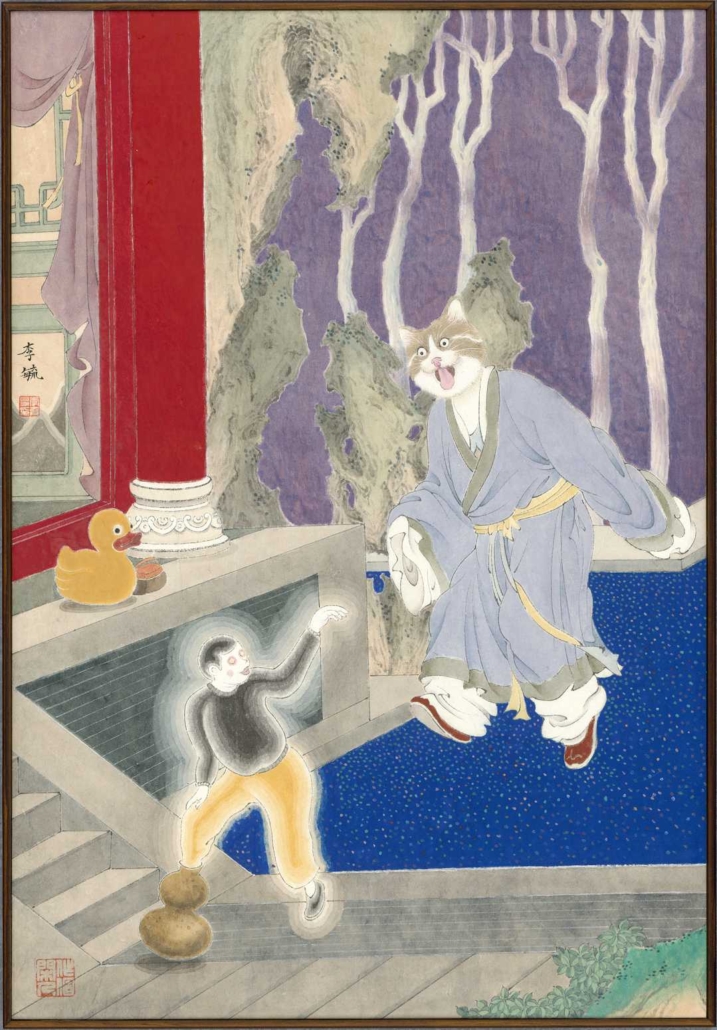
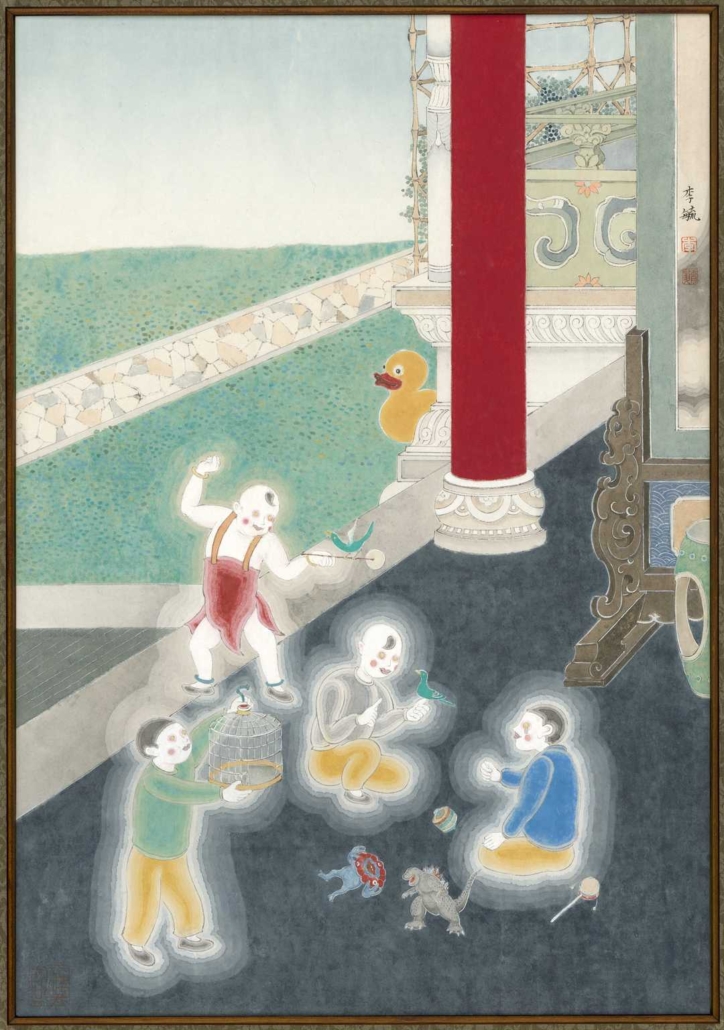
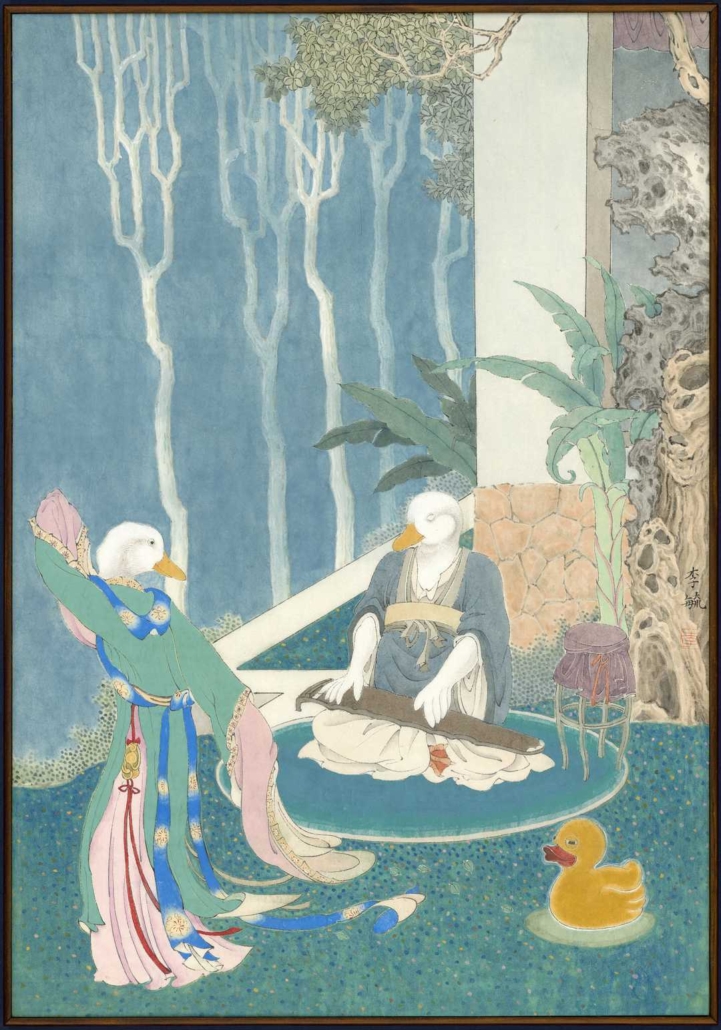
此次展出的〈眾相〉系列,以「獸首人身」為主要意象,呈現一個介於真實與荒誕之間的世界。犬首、鵝首、貓首之人宴飲、交談、遊戲,行於塵俗卻又超脫凡間,看似滑稽,實則蘊含人性寓言。作品精神亦承襲溥心畬〈神異圖〉的啟發——以異象映照人心,以志怪的視角呈現人世百態,使「神異」成為理解現代生活的切入點。
畫面中的香煙、殘桌、奇石象徵時間與文明的剝落,在靜止構圖裡緩緩流動,訴說著生命中微隱而深長的感知。李育昇透過工筆技法的精準與重彩的層次,構築出一種「當代神異」的場域,邀請觀者在荒誕與莊嚴之間,看見眾生,也看見自己。
李育昇創作自述|〈眾相〉
繪畫之道,於我而言,乃在古意之中尋得新生。古人以筆為性情之寄,今人則於筆墨中追問自身的所在。傳統並非枷鎖,而是一座靜默的山脈,藏著無數未被窮盡的可能。當我追尋前人筆法、觀察自然形色,並非止於摹古或寫實,而是在那層層交疊的筆墨之間,探尋屬於當下的回聲。
宋人之工,重於理性與秩序;元人之逸,貴於胸臆與神韻。兩者雖有異趣,卻同樣寄託著對生命與人文的深刻體悟。這種理與情、形與意之間的張力,正構成我創作思考的核心。以古典工筆技法為骨,融入當代思索為魂,於嚴謹與自由間求取平衡,這便是我對「創作」的理解——於塵世萬象中,尋找自我內心的相。
此次展出的〈眾相〉系列,延續我對人與動物關係的探討。畫中人物多以「獸首人身」之形現世,靜坐、宴飲、交談、遊戲,看似滑稽可笑,實則寓有深意。這些形象的構思,乃受書畫名家溥心畬儒先生〈神異圖〉系列啟發。溥氏以文人筆墨繪志怪、寫神祇,將古代志怪之想轉化為寓意圖像,使「異」成為觀照「人」的鏡面。對我而言,這樣的筆法與精神,正是傳統與當代的交界點——在古意的筆墨裡說今人的語言。
畫中所現的「顛倒世界」,是我所見的人間縮影。當獸以人的姿態行事,當神以凡心自居,世間的秩序遂顛覆而重生。那些穿著古服的犬首、鵝首、貓首之人,並非神怪,而是人心的投影。牠們飲食、對談、獻祭、遊戲,行於塵世之中而不自覺;而畫面中的香煙、奇石、殘桌,則象徵時間的流逝與文明的剝蝕。這些細節,在看似靜止的構圖裡,悄然流動,如一縷焚香,既清明又哀婉。
在技法上,我仍以傳統工筆重彩為主體,藉由礦植物顏料的層層渲染。每一道線條的轉折、每一層色彩的交疊,皆是與古為徒、與心為師的修習。這樣的工法不僅是技術,更是一種時間的凝視——在緩慢的筆觸中,思索現代人如何在快節奏的世相裡,重新找回「靜」與「真」。
我所描繪的,不是傳說,也不是夢境,而是一種「當代的神異」。在荒誕與莊嚴之間,我試圖構築一個介於真實與想像的世界,讓觀者於其間看見自身的投影。〈眾相〉,不僅是畫中之眾生,更是我們共同的樣貌。
當畫面平靜地結束,煙氣散去,所餘者唯有那份清明的感悟——
歲月不待人,大道無情,惟有於眾相之中,尋回人之本心。
Artist Statement|Yu Sheng Li – All Living Beings
For me, the path of painting lies in discovering new life within ancient traditions. The brush once carried the temperament of the ancients; today, it becomes a means for us to question our own place in the world. Tradition is not a constraint, but a silent mountain range—vast, enduring, and filled with possibilities yet to be exhausted. In studying the techniques of earlier masters and observing the forms of nature, I am not merely copying or depicting the real; rather, I seek the echoes of the present hidden within layers of intersecting brush and ink.
The Song dynasty valued precision and order; the Yuan dynasty prized spontaneity and inner spirit. Though different in approach, both hold deep reflections on life and human culture. The tension between reason and emotion, form and intention, forms the core of my artistic inquiry. Using classical fine-line painting as the structural foundation and contemporary thought as its animating force, I search for balance between discipline and freedom. This is how I understand creation—an attempt to uncover the inner appearance of the self amid the myriad phenomena of the world.
The All Living Beings series continues my exploration of the relationship between humans and animals. Figures with animal heads and human bodies—sitting, feasting, conversing, playing—appear humorous on the surface yet carry layered meaning. These images are inspired by Pu Hsin-yu’s Illustrations of Divine Oddities, in which literati brushwork is used to portray the strange and the divine. By transforming ancient tales of the supernatural into allegorical imagery, Pu allows the “other” to become a mirror for the human world. For me, this spirit marks a threshold where tradition meets the contemporary—speaking today’s language through the ink of antiquity.
The “upside-down world” depicted in these works is, to me, a reflection of our own. When beasts act with human gestures, and deities embody mortal desires, familiar order becomes overturned and reborn. The dog-headed, goose-headed, and cat-headed figures dressed in traditional robes are not mythical beings, but projections of the human heart. They eat, talk, offer, and play as they move through the world unaware of their own strangeness. Incense smoke, scholar’s rocks, and broken tables symbolize the erosion of time and civilization. These subtle details drift within seemingly still compositions—like a rising thread of incense, clear yet tinged with melancholy.
In technique, I continue to employ traditional fine-line painting with layered mineral and botanical pigments. Every turn of a line, every accumulation of color, is both a study of the past and a dialogue with the self. This approach is not only craftsmanship but a contemplation of time—an attempt to rediscover stillness and authenticity in an age of accelerating pace.
What I portray is neither legend nor dream, but a form of “contemporary divinity and strangeness.” Between the absurd and the solemn, I aim to construct a world suspended between reality and imagination, where viewers may find reflections of themselves. All Living Beings refers not only to the figures within the paintings, but to all of us who share these mirrored forms.
And when the scene comes to rest—when the smoke fades—
what remains is a quiet clarity:
time spares no one, the world moves unceasingly,
and only within these myriad beings may we rediscover the heart of who we are.